Marcus Aurelius “Meditations”: A Book That Whispers The Truth
- Yuliia Berhe
- Dec 4, 2025
- 3 min read
Markus Aurelius lived in the second century AD and was a Roman Emperor for about 20 years. He never meant to write a book; he was writing down his thoughts, emotions, and feelings every day. Now it is called journaling, so maybe he was one of the first people who wrote to himself as a way to reflect, to stay balanced and sane while ruling the empire. It was his private journal, and he titled it “Τὰ εἰς ἑαυτόν” which means “To Himself.” That’s why the book feels very intimate: sometimes like a confession, sometimes like a conversation with the Lord and his Higher Self, sometimes like a chaotic triggering and annoying thoughts occurring in his head and devastating him.
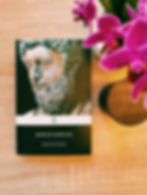
Aurelius wrote this book during the time of war and crisis, which is why its value now is even deeper and more precious.
The title of the book was transferred to “Meditations,” which came from Western translators in about 17th century, and it makes sense because his book is a real meditation.
The book touched me because I understood and felt by every cell in my body that even a great emperor was first a human being with his fears, vulnerabilities, lack of confidence, self-doubt, and inner imbalances, BUT at the same time a great leader and philosopher.
Even the emperor has fears and can be overwhelmed.
Even when you have everything, your life is fragile.
Even the strongest people are vulnerable and need the tools to navigate the uncertainty.
Introspection is a pivotal skill.
Leadership is an emotional burden, and not a throne.
His book is a mirror, and it shows you through his insights and questions who you are; sometimes it's really frightening. What impressed me most - he wrote to himself, not to the world, not to the next generations, but to his fragile and vulnerable soul. And I felt relief - he was just a human being, going through his inner struggles and even wars. He was writing about the dignity of pause, being here and now, shadows of the unknown and challenges, and his reactions to all of those.
His “Meditations” is powerful not because of philosophy saturated on every page, but because of vulnerability. Marcus Aurelius admits that we are all just trying to navigate the fragile world wrapped in uncertainty and chaos.
“You have power over your mind - not outside events. Realize this, and you will find strength.”
“If you are distressed by anything external, the pain is not due to the thing itself, but to your estimate of it.”
“Waste no more time arguing about what a good man should be. Be one.”
“Nowhere can man find a quieter or more untroubled retreat than in his own soul.”
“The best revenge is not to be like your enemy.”
“At dawn, when you have trouble getting out of bed, tell yourself: I am rising to do the work of a human being.”
“If it is endurable, then endure it. If it is not, then stop complaining. Your destruction will mean the end of the suffering.”
“The soul becomes dyed with the color of its thoughts.”
“Life is neither good nor bad, but only a place for good and bad.”
“Do not act as if you had ten thousand years to live.”
“The happiness of your life depends upon the quality of your thoughts.”